Updated: November 2026. The rules below are summarised from official sources (European Commission, GOV.UK, EU Delegation to Georgia) and may change — check the website of the relevant embassy or border authority before you travel.
Short answer: Georgian citizens can enter the Schengen Area, as well as Romania, Bulgaria and Cyprus, without a visa in 2027 too, for tourism or business — for up to 90 days in any 180-day period. You need a biometric passport issued within the last 10 years and valid for at least 3 more months after the day you leave Europe. Border guards may ask to see a return ticket, a hotel booking, proof of sufficient funds and travel insurance. Since April 2026 the biometric Entry/Exit System (EES) has been running at every external Schengen border — your fingerprints and photo are taken on your first entry, and passports are no longer stamped. The ETIAS online authorisation has not launched yet. The UK and Ireland still require a visa.
Who can enter Europe visa-free, and where
Since 28 March 2017, holders of Georgian biometric passports have been able to travel to the Schengen Area without a visa. As of November 2026, this regime remains in force for holders of ordinary passports. There is one change to be aware of: from 6 March 2026 the European Commission suspended visa-free travel for 12 months only for holders of diplomatic, service and official passports — this group now needs a visa to enter Schengen. The Commission has the power to extend this measure to all citizens in the future, so keep an eye on the news when planning trips for 2027 — we will update this page as soon as anything changes.
Visa-free travel applies to all 29 Schengen countries (including Romania and Bulgaria, which became full members in 2025) and to Cyprus, which follows EU visa rules. It does not apply to the United Kingdom or Ireland — each requires its own visa. Visa-free entry is only for short stays: tourism, visiting relatives, business meetings, conferences, short training courses or medical treatment. Working, studying at university or staying longer than 90 days requires a national (type D) visa or a residence permit.
Document checklist for the Schengen Area
| Document | Mandatory? | What is checked |
|---|---|---|
| Biometric passport | Yes | Issued within the last 10 years; valid for ≥ 3 months after your return date; not damaged. You cannot cross the border with an ID card. |
| Return or onward ticket | On request | The return date falls within the 90-day limit |
| Proof of accommodation | On request | Hotel/apartment booking or an invitation from your host (in some countries on an official form) |
| Sufficient funds | On request | Cash, a bank card and a statement — according to the country’s daily amount (see below) |
| Travel insurance | Recommended | Not formally mandatory for visa-free entry, but border guards can ask for it; coverage ≥ €30,000 |
| Proof of the purpose of travel | On request | Tour itinerary, conference invitation, letter from a medical facility, etc. |
| For children — birth certificate and parental consent | Depends on the situation | See the “Travelling with minors” section |
Border guards don’t always ask for all of these — in most cases they just look at your passport and ask a few questions. But if you don’t have a document they ask for, they are entitled to refuse entry. So always carry printouts (or copies saved on your phone) of your ticket, booking and insurance. You can search for flights on flights.avia.ge, and we have a separate guide on choosing a policy: Travel insurance 2026 — what it costs and what it covers (in Georgian).
The 90/180 rule — how to count correctly
Without a visa you can stay in Schengen for a total of 90 days in any 180-day period. This does not mean “90 days per half calendar year”: for every day you are in Schengen, you look back 180 days and check that you have not spent more than 90 days inside that window. The days of entry and exit count as full days. Days spent in all Schengen countries add up together — 60 days in Germany followed by 40 days in Greece is already an overstay. The exceptions are Cyprus, Ireland and the UK — days spent there do not count towards the Schengen limit.
To count your days, use the European Commission’s official short-stay calculator — just enter your entry and exit dates. Since 2026 the EES also counts these days automatically, so even an overstay of a day or two is recorded and can lead to problems on your next entry or a ban of several years.
EES — the biometric border since 2026
On 12 October 2025 the Schengen Area began gradually rolling out the Entry/Exit System (EES), and since 10 April 2026 it has been fully operational at all external borders. What changes in practice:
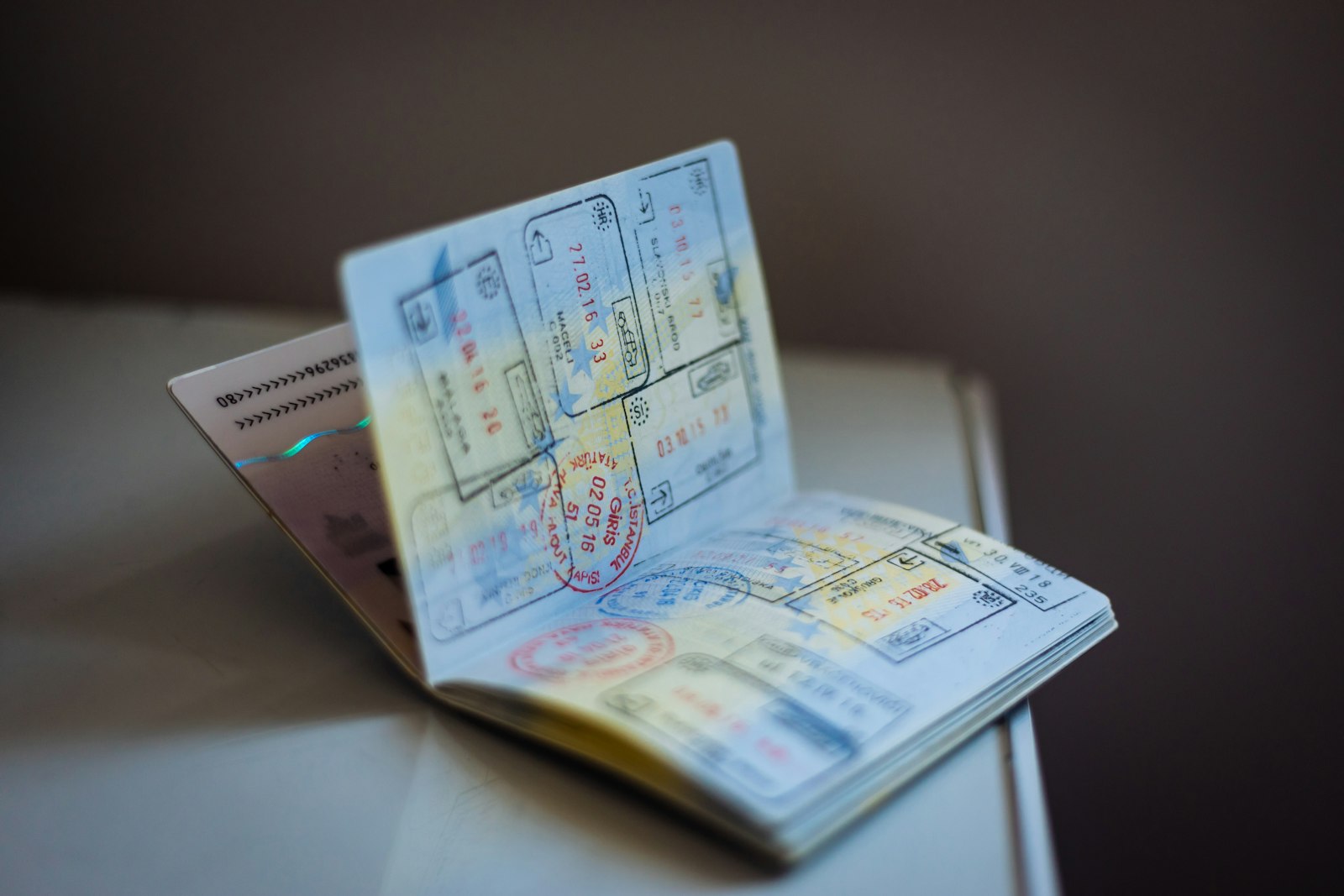
No more passport stamps. Instead of a stamp, the system electronically records the date and place of your entry and exit and your passport details. The 90/180 days are counted automatically.
Biometrics on your first entry. At the border (at the airport — at a self-service kiosk or the border guard’s booth) your face is scanned and four fingerprints are taken. The data is stored for 3 years, so on later trips only a quick face match is needed. Children under 12 are not fingerprinted.
More time at the border. Registration on your first entry takes a few minutes, and queues get longer at peak times. If you have a connecting flight within Europe, don’t book a layover shorter than 2 hours. When flying in from Kutaisi with Wizz Air, this applies especially to small airports (e.g. Memmingen, Treviso, Beauvais), where the number of border guards is limited.
What EES does not change: the conditions of the visa-free regime, the 90-day limit and the list of documents stay the same. EES is not a visa and does not require any advance registration — it is simply a new technical procedure for crossing the border.
ETIAS — when Georgians will need a travel authorisation
ETIAS (European Travel Information and Authorisation System) is an online authorisation for citizens of visa-exempt countries — similar to the American ESTA. Once it launches, every Georgian traveller will have to fill in an online application before going to Europe: passport details, contact information and a few security questions. The fee is €20 for travellers aged 18 to 70 (free for children and those over 70), and the authorisation is valid for 3 years or until the passport expires, for multiple entries.
As of November 2026 ETIAS is not operating and no applications are being accepted. Over the summer the European Commission removed the “last quarter of 2026” target from its official page and says it will announce the launch date a few months in advance. Realistically, that means 2027. Two things matter: after launch there will be a 6–12-month transition period during which you can still enter without ETIAS; and any website offering paid ETIAS “processing” today is a scam — the only official address will be travel-europe.europa.eu/etias.
How much money do I need at the border?
Each country sets a “reference daily amount” that a traveller should have. Bank statements or cash are rarely requested, but if they are, these are the figures border guards go by. Indicative amounts for 2026 (check the country’s border authority website):
| Country | Daily amount per person | Note |
|---|---|---|
| Germany | ≈ €45 | General guideline; decided case by case |
| France | €65 with a hotel booking / €120 without | Less with an official host invitation (attestation d’accueil) |
| Italy | ≈ €54 (min. €270 per visit) | Less for groups and longer stays |
| Spain | ≈ €113 (min. ≈ €1,020) | One of the highest requirements |
| Poland | PLN 75 (≈ €18), min. PLN 300 | PLN 20/day for prepaid tours |
| Czech Republic | ≈ €64 (CZK 1,565) | For visits of up to 30 days |
| Greece | €50 (min. €300) | — |
| Netherlands | ≈ €55 | Applied flexibly |
| Hungary | ≈ €25 (HUF 10,000) | — |
| Austria | No fixed amount | Individual assessment |
To prove your funds you can show a bank card together with a balance statement (a screenshot from a Georgian banking app is usually enough), cash, or an official undertaking from your host to cover your expenses. A prepaid hotel and ticket reduce the amount required.
United Kingdom: a visa is still required
Georgian citizens are on the UK’s list of “visa nationals”, so the new electronic travel authorisation (ETA) does not apply to us — a full visa is required. For tourism, family visits and business trips this is the Standard Visitor visa:
Fee — £135 for a 6-month visa (GOV.UK, October 2026); 2-, 5- and 10-year multiple-entry visas are also available at a higher price. Length of stay — up to 6 months per visit. Application — online only, on GOV.UK, no earlier than 3 months before travel; then you attend a visa application centre in Tbilisi to give your biometrics. Processing time — about 3 weeks as standard, longer in peak season; a paid priority service is also available.
Documents: a valid passport (old passports with previous visas are a plus), bank statements for the last 6 months, a letter from your employer or proof of student status, your travel and accommodation plans (buying a ticket in advance is neither required nor recommended), and an invitation if you are staying with someone. The main thing the officer assesses is your “ties to home” — that you will return to Georgia after the visit. We have separate pages on flights to the UK: Tbilisi – London and Kutaisi – London.
Ireland is not part of Schengen, and a UK visa is not valid there either — Georgians need a separate Irish short-stay (C) visa. You apply online via the AVATS system and send your documents to the relevant Irish diplomatic mission.
Travelling with minors
A child must have their own biometric passport — being entered in a parent’s passport is no longer valid. If a child travels with only one parent or with another adult, EU border guards may ask for notarised consent from the other parent (or both parents) and the child’s birth certificate — especially if the surnames differ. Georgian rules for leaving the country may differ, so check your specific case with the Public Service Development Agency or the Border Police. It also helps to carry an English translation of the consent. Airlines (including Wizz Air and Pegasus) have their own rules for unaccompanied minors — check them before buying a ticket.
What you will be asked at the border — step by step
1. Before departure: check your passport’s validity (return date + 3 months) and issue date (no older than 10 years); count your 90/180 days; buy insurance; save your bookings on your phone and print them out.
2. At the Georgian border (departure): passport control and a stamp. For children, the consent is checked where required.
3. At the Schengen border (entry): EES kiosk or border guard — biometrics, then questions: the purpose of your trip, where you are staying, for how long, when you are going back and how much money you have. Answers should be short, specific and consistent with your documents. Passports are no longer stamped — your exit is also recorded automatically by the system.
4. On the way back: make sure your exit is recorded (go through passport control, don’t skip it). If your flight is delayed and you overstay the limit through the airline’s fault, keep the supporting documents — they will protect you from problems on your next entry, and our flight delay compensation guide (in Georgian) will help you claim compensation.
Common mistakes that lead to refusal at the border
A passport that is “almost” valid. Only 2 months left on the day you return is not enough — you need at least 3. The airline will refuse boarding and the ticket will be lost.
Miscounting the 90 days. “I last spent 60 days there in April, it’s October now, so I have 90 again” — that is only true if more than 180 days have passed since April. Use the calculator.
A one-way ticket with no explanation. When travelling visa-free, a return ticket is one of your strongest arguments. If you are returning from a different country (e.g. flying into Vienna and out of Budapest), show both tickets.
Stating the wrong purpose. If you are going to meet a potential employer but say you are a “tourist”, and your documents then suggest otherwise, this is the most common reason for refusal and future bans. Short business meetings are allowed visa-free — just tell the truth and carry the invitation.
Flying to the UK “on a Schengen visa”. Even a transit through London may require a visa (Direct Airside Transit Visa) if you change terminals. For direct Kutaisi–London flights a full Visitor visa is mandatory.
And finally — your documents are ready, now it’s time for the ticket. We describe our tactics for finding cheap flights in a separate article: how to buy flight tickets as cheaply as possible, and all European destinations from Kutaisi are collected in one place in our complete Georgian-language Wizz Air guide. Search for tickets: flights.avia.ge.
November 2026 update: what the European Commission says about visa-free travel
In early November 2026 the European Commission published its annual enlargement report. It notes that Georgia has practically failed to implement the recommendations of the latest reports under the visa suspension mechanism, and that the visa dialogue held in June 2026 brought no progress. Brussels particularly highlights overstays in the EU and unfounded asylum claims — in 2025 alone, Georgian citizens lodged more than 15,000 asylum applications in EU countries.
What this means for travellers: no decision has been taken so far to suspend visa-free travel for holders of ordinary passports — the suspension still applies only to diplomatic, service and official passports. If you are planning a trip to Europe several months ahead, it makes sense to choose a fare that allows date changes and a hotel with free cancellation — that way you won’t lose money if anything changes. And following the visa-free rules (90/180 days, stating your purpose of travel correctly) protects you personally from an entry ban.
Document checklist for the day before departure
- Passport — valid for at least 3 months after your return date and issued within the last 10 years;
- Tickets or booking confirmation for both directions (email or printout);
- Hotel or apartment booking, or your host’s invitation and address;
- Travel insurance policy (coverage of at least €30,000);
- Bank card and balance statement, or cash according to the country’s daily amount;
- When travelling with a child — birth certificate and, if required, notarised parental consent;
- Copies of all documents on your phone, accessible without an internet connection.
Frequently asked questions
Do Georgians need a visa for Europe in 2027?
For the Schengen Area, Romania, Bulgaria and Cyprus — no: with a biometric passport you can enter visa-free for up to 90 days in any 180. A visa is required for the UK, Ireland and any stay longer than 90 days or for work or study. Since March 2026 holders of diplomatic and service passports also need a visa.
How long must my passport be valid?
At least 3 months beyond your planned date of departure from Schengen, and it must have been issued within the last 10 years. For the UK, your passport must be valid for the whole of your stay.
What is EES and do I need to register in advance?
EES is the biometric Entry/Exit System at Schengen borders, fully operational since 10 April 2026. No advance registration is needed — your fingerprints and photo are taken at the border on your first entry. Passports are no longer stamped.
Do I need to get ETIAS already?
No. As of November 2026 ETIAS has not launched and no applications are accepted. Once it does, the fee will be €20 and the authorisation will be valid for 3 years. Paid offers of “ETIAS processing” today are a scam.
Is travel insurance mandatory for visa-free entry?
Formally no, but border guards can ask for it, and medical costs in Europe are very high. A policy with coverage of at least €30,000 for the whole trip is recommended.
How much does a UK visa cost for Georgians?
A 6-month Standard Visitor visa costs £135 (GOV.UK, 2026). You apply online, give your biometrics in Tbilisi, and standard processing takes about 3 weeks.
Could visa-free travel be suspended for all citizens?
The EU’s revised suspension mechanism allows for this, but as of November 2026 no such decision has been taken for holders of ordinary passports. Before buying a ticket, check the official information from the EU Delegation or the Ministry of Foreign Affairs and, where possible, choose a flexible fare.
Photo: Global Residence Index / Unsplash